Hey, it’s been a while, but I have some updates.
Ever since my husband and I got married, we knew we wanted to have children. What we didn’t know was that our journey to parenthood would take nearly five years. After undergoing countless tests and consultations, we learned that we are both facing fertility challenges. We’ve consulted with three different doctors, and they all came to the same conclusion: IVF is our best—and only—option.
Now that we’re in the middle of this journey, I wanted to share our experience with you. I hope to document each step, so we can look back on how far we’ve come, and maybe our story will also bring comfort or encouragement to someone else walking a similar path.
Here’s our IVF journey, from the very beginning until, hopefully, we get to meet our little miracle.
What is IVF?
In vitro fertilization (IVF) is a fertility treatment where eggs are collected from the ovaries and fertilized with sperm in a laboratory. The resulting embryo is then placed into the uterus, where it may implant and develop into a pregnancy. IVF is one of the most common and effective treatments for people experiencing infertility or needing assisted reproductive care.
The IVF process typically involves several steps:
- Ovarian stimulation – Fertility medications encourage the ovaries to produce multiple mature eggs.
- Egg retrieval – A doctor collects the eggs from the ovaries during a minor procedure.
- Fertilization – The eggs are combined with sperm in a laboratory. In some cases, a single sperm is injected directly into an egg using a technique called Intracytoplasmic sperm injection (ICSI).
- Embryo development – The fertilized eggs (embryos) are monitored for several days as they grow.
- Embryo transfer – One or more embryos are placed into the uterus.
- Pregnancy test – About 9–14 days later, a blood test checks whether implantation was successful.
Where are we at?
We are at the first step. The process was a bit frustrating because my follicles weren’t the right size, so I had to continue taking hormone injections for a few more days. We had to go to the hospital every two days for monitoring. At each visit, I underwent a transvaginal ultrasound as well as baseline bloodwork.
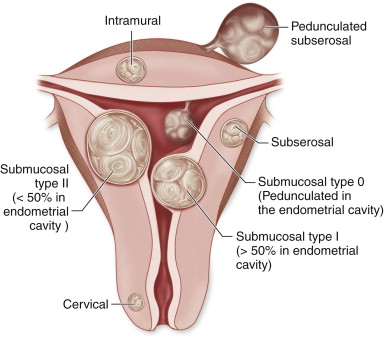
I should also mention that I have both intramural and pedunculated subserosal fibroids. The fibroid located outside my uterus made it difficult for the doctors to see the follicles in my left ovary because the ovary sits behind the fibroid. That same fibroid also puts significant pressure on my bladder, so I constantly feel the need to use the restroom. Let’s just say my ultrasound appointments were far from pleasant—but the worst was yet to come.
Mock Embryo Transfer
At my very first transvaginal ultrasound, a nurse told me that I would be doing a mock embryo transfer. I was not mentally prepared for it, so I freaked out a little bit. This process was supposed to be a painless practice run where the doctor inserts an empty catheter through the cervix into the uterus. It measures uterine depth, maps the cervical angle, and identifies challenges (like blockages or tilting) to ensure the real transfer is quick, accurate, and stress-free.
For some reason, it was painful. I left the office in tears. Mind you, most of these steps are administered during your cycle. I was already sensitive and fragile.
In the following post, I’ll touch on the most excruciating procedure of my egg retrieval.
Thanks for reading,
Ga’L
Leave a Reply